
Euro cylinder locks are common on UK homes, particularly on uPVC and composite doors. The cylinder is the part you operate with a key or thumbturn. Knowing which type you have helps when arranging a repair, changing keys or choosing a security upgrade.
The name describes a profile, not a security rating or a universal size. Two cylinders can look similar but differ in length, operation and protection. This guide explains how to identify the component, understand the options and prepare for a replacement without confusing it with the rest of the door lock.

What is a euro cylinder lock?
A euro cylinder has a recognisable profile: a rounded upper section containing the keyway, with a narrower section beneath it. Much of its body is hidden inside the door and surrounding hardware. The visible keyhole is only one part of the component.
Turning an authorised key allows a central cam to operate the connected lock mechanism. Depending on the door, that mechanism may be a single-point lock or a multipoint system with bolts and hooks along the edge. The cylinder and mechanism perform different jobs.
This is why “change the lock” can mean several things. Replacing the cylinder changes the keyed component. Replacing a gearbox or locking strip addresses other parts of the system. A locksmith should establish which work is needed before recommending replacement parts.
Which doors use euro cylinders?
Euro cylinders are fitted to many uPVC and composite entrance doors, and to some timber, aluminium and patio-door arrangements. You may find them at the front, back or side of a house. The door material alone does not confirm the lock type.
Do not confuse a euro cylinder with an oval-profile cylinder, a round rim cylinder used with a nightlatch, or a traditional lever mortice lock. These are different arrangements. A clear photograph of the handle and keyhole can help a locksmith identify the likely type.
If you have several entrances, check each separately. The front door may have a different cylinder length or operating style from the back door, even when the handles look identical. Ordering matching-looking replacements without checking each installation can lead to unsuitable parts.
The main types of euro cylinder
Double-key cylinders
A double-key cylinder has a keyway on each side. It allows key operation from inside and outside. Consider how everyone in the household uses the door and whether this arrangement is appropriate for the escape route, rather than choosing it simply because the old cylinder had two keyholes.
Thumbturn cylinders
A thumbturn cylinder normally has an external keyway and an internal turn knob. It lets someone operate the lock from inside without inserting a key. The thumbturn must be on the correct side and have enough clearance to operate comfortably with the surrounding furniture.
Single or half cylinders
A single, sometimes called half, cylinder provides key operation from one side. These suit particular applications rather than serving as a general replacement for a two-sided entrance-door cylinder. The required function and dimensions should be checked against the mechanism and manufacturer’s instructions.
When discussing an order, describe the operation in plain language: key on both sides, key outside and thumbturn inside, or key on one side only. This is clearer than relying on a product photograph that may show several available versions together.
Understanding euro cylinder sizes
Cylinder sizing normally uses two dimensions measured from the centre fixing position to the cylinder ends. These measurements distinguish the internal and external portions. The two sides may have different lengths because the lock is not necessarily centred within the finished door and handles.
For example, 35 mm and 45 mm add up to an 80 mm cylinder body. That does not make it equivalent to a 40/40 cylinder. The total length is the same, but the position of each end relative to the central fixing point is different.
Follow the chosen manufacturer’s measurement diagram and ordering convention. ERA’s measuring and ordering instructions, for example, explicitly identify internal and external dimensions. Do not assume every supplier lists these in the same order.
Account for the handles and protective furniture
The finished installation must fit the surrounding hardware correctly. A cylinder that projects excessively can leave unnecessary exposure, while one that sits too far back may be awkward to use or incompatible with the furniture. Check the specific product’s fitting requirements rather than applying a guessed allowance.
Copying an existing cylinder’s length is not always the right answer: it may already be poorly sized. New handles can also change the dimensions needed. Ask the locksmith to check the intended finished arrangement, especially if both the cylinder and furniture are being replaced.
Keep the inside and outside clearly labelled
Orientation matters for thumbturns and cylinders with a designated external end. Label measurements as inside and outside when discussing a quotation. A note such as “long side outside” can help avoid confusion, but it should support accurate dimensions rather than replace them.
Will a replacement fit the existing mechanism?
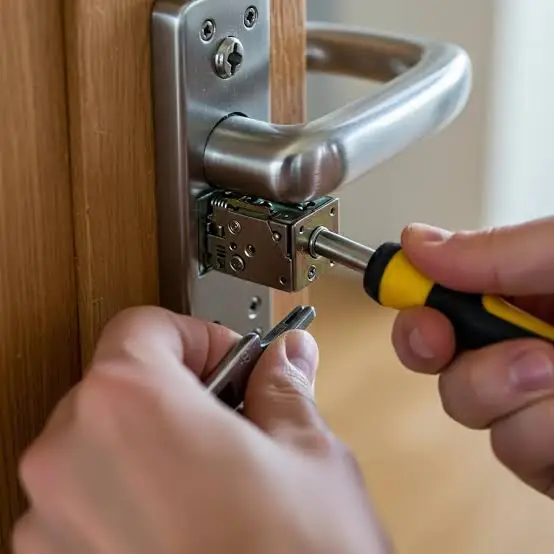
A shared euro profile does not guarantee that every cylinder works with every mechanism. Some applications require a particular cam arrangement or operating function. Specialist locks, electronic accessories and certain escape-door systems need compatibility checked against their own documentation.
Tell the installer if the door has a smart-lock attachment, access-control equipment or unusual operation. Share the model details where available. A replacement can physically enter the opening yet still be the wrong choice for the complete system.
You do not need to remove the cylinder before making an enquiry. Explain the door type, visible markings and the reason for the change. Our Lock Upgrades service can help establish a suitable specification and whether other hardware needs attention.
Choosing security features without getting lost in labels
Euro cylinders vary considerably in protection. A familiar brand, complicated-looking key or the phrase “high security” is not enough to identify tested performance. Ask for the exact model, relevant independent approval and the specification of any protective furniture.
For snapping protection, our Anti-Snap Locks Explained article covers TS007 three-star cylinders, compatible protective-hardware arrangements and Sold Secure approvals. If you want to understand the underlying problem first, read What Is Lock Snapping?.
Keep standards in context. BS3621 concerns a different lock-assembly specification; it is not a general name for every secure euro cylinder. Our BS3621 Explained guide helps distinguish the terminology. Any replacement also needs to satisfy the requirements relevant to your particular door.
Keys, convenience and access arrangements
One key for several doors
Some compatible cylinders can be supplied keyed alike, allowing one key to operate several entrances. This can simplify a household keyring, but losing that key may affect all those doors. Ask whether the required sizes and operating types are available within the chosen system.
Getting extra keys
Confirm how many keys are included and how duplicates are obtained. Some products have controlled ordering arrangements or a security card; others use different procedures. Keep any card or code securely and ask about additional-key costs before deciding on a system.
A key left on the other side
Do not assume that an outside key will work while another key is inserted inside. The behaviour depends on the cylinder. Some models offer an emergency or double-clutch function; EVVA describes an optional both-sides operating function within its cylinder range.
If this matters for a carer or trusted keyholder, explain the scenario before ordering and confirm the exact function supplied. This feature is not the same as keyless escape and does not, by itself, establish that the cylinder is suitable for a particular escape door.
When should you replace a euro cylinder?
Replacement may be sensible after lost keys, a change in access arrangements, damage or a confirmed need for better protection. Moving house is another opportunity to consider who could still hold a copy of the old key. These reasons are separate from ordinary mechanical wear.
If the key sticks or the door is difficult to lock, the cylinder may not be the cause. Alignment, handles or the mechanism can create similar symptoms. Notice when the problem happens and describe it to the locksmith; avoid repeatedly forcing the key or handle.
A suitable working cylinder does not need changing simply because another product is newer. Our Lock Repairs service can help assess an operating fault, while a security review can establish whether replacement would offer a practical benefit.
What to check before and after fitting
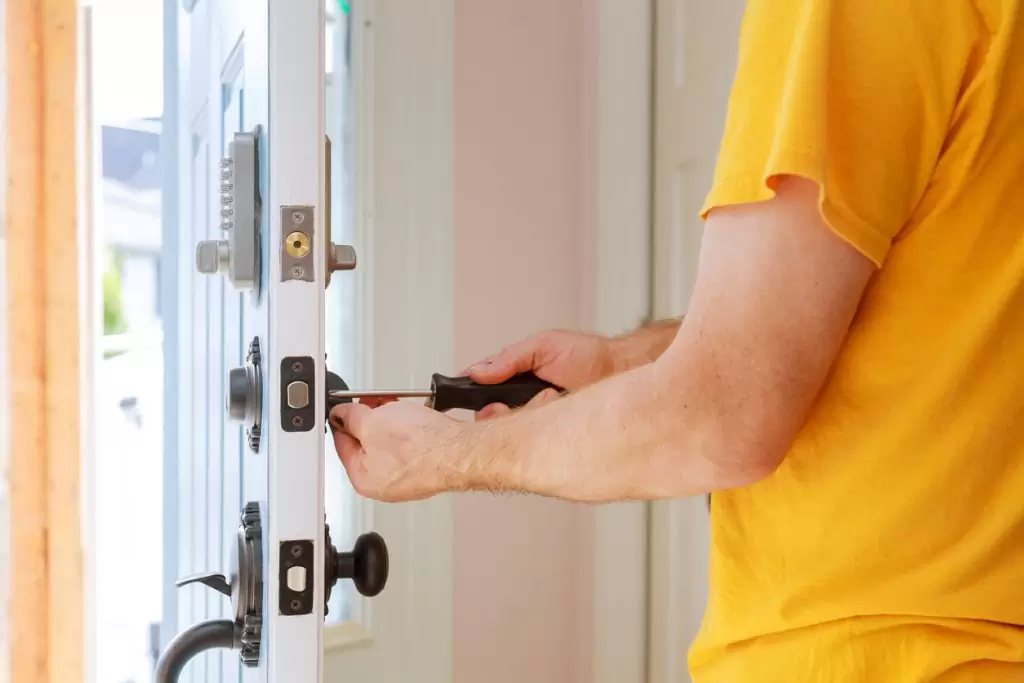
Before booking, request the proposed model, dimensions, operating type, security specification, supplied keys and total price. Mention any existing fault so the quotation reflects more than a straightforward component swap. Ask whether additional handles, repairs or attendance charges are included.
For a flat entrance or fire door, involve someone competent to check the whole installation and its escape arrangements. Tenants should discuss changes with the landlord or managing agent where appropriate. Selecting the right cylinder includes preserving the door’s intended function.
After fitting, ask for a demonstration and try the supplied keys or thumbturn. The installer should confirm reliable operation with the door open and closed. Keep the invoice and product details, and follow the manufacturer’s maintenance instructions rather than applying an unspecified oil.
Check that everyone who uses the entrance understands the locking sequence. On some doors the handle must be lifted before turning the key; other systems behave differently. Knowing the actual operation is more useful than assuming every multipoint door works in the same way.
Frequently asked questions about euro cylinder locks
Are all euro cylinders the same size?
No. They share a recognisable profile but come in different lengths and internal/external combinations. Check each side’s measurement, the operating type and compatibility. Matching the total length alone does not establish the correct fit.
Does a thumbturn automatically lock the door?
No. A thumbturn is an internal control, not a promise of automatic locking. Whether anything locks automatically depends on the connected mechanism. Ask for a demonstration of the complete door and follow its operating instructions.
Can I change the cylinder without replacing the door?
Often, yes, if the existing door and mechanism remain suitable. A cylinder is a replaceable component in many systems. Damage or compatibility issues may require additional work, so an assessment should come before deciding exactly what to replace.
Is a euro cylinder an anti-snap lock?
Not necessarily. “Euro” identifies the profile, while snapping protection depends on the cylinder’s tested performance and surrounding hardware. Verify the product specification rather than assuming that all cylinders with the same shape offer equivalent security.
Can I keep my old keys?
An ordinary replacement generally comes with its own keys. Whether another arrangement is possible depends on the lock system and supplier. If you are changing the cylinder because keys are missing, retaining the old key access would not resolve that concern.
What if my cylinder is damaged or the door will not lock?
Arrange an assessment promptly. Our Emergency Locksmith service can help with urgent lock problems. Explain whether the door opens, whether the key turns and whether the property is secure, so the required response can be assessed.
Get help choosing a euro cylinder
Stride Lock & Key can help homeowners in Horley, Reigate, Redhill, Crawley and surrounding areas identify existing cylinders and discuss suitable repairs or replacements. Contact us with your door details, or consider a Home Security Check for a wider review. Visit our Knowledge Centre for more practical lock guidance.