
Mortice locks sit inside a pocket cut into the edge of a door. They are a familiar feature of many UK timber doors, but the term covers several designs. Understanding which one you have helps when describing a fault, checking security or comparing replacement options.
This guide explains deadlocks and sashlocks, lever counts, important measurements and common operating problems. It also shows why the right choice depends on the complete door, rather than simply buying a lock that looks like the old one.
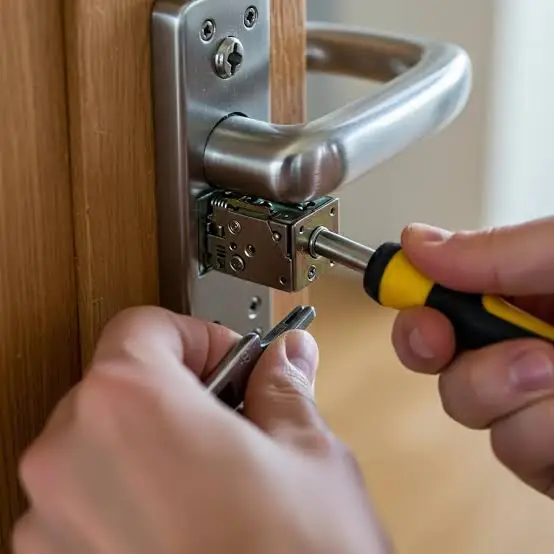
What is a mortice lock?
“Mortice” describes how the lock case is installed: it is recessed into the door rather than mounted entirely on its surface. A metal faceplate, also called a forend, is visible at the door edge. The bolt engages with a corresponding plate or keep in the frame.
The recessed case contains the mechanism. In a traditional lever lock, the correct key moves internal levers into the required positions so the locking bolt can operate. Other mortice lock cases use a separate cylinder instead of a traditional lever key.
The installation method does not establish the security level. A mortice lock might serve an internal room or an external entrance, depending on its specification. Start by identifying its function and documented performance before deciding whether it suits the job.
Mortice deadlock versus mortice sashlock
Deadlocks: a locking bolt without a handle-operated latch
A mortice deadlock has a locking bolt but no spring latch operated by a lever handle. It may be fitted alongside a separate latch or nightlatch, so another component holds the door closed when the deadlock is unlocked. On a traditional lever version, the key operates the bolt.
Sashlocks: a latch and locking bolt in one case
A mortice sashlock combines a spring latch with a locking bolt. The handles operate the latch, while the key operates the deadbolt on a conventional lever sashlock. This allows one lock case to provide everyday latching and separate locking.
The distinction is about function, not an automatic ranking of strength. A suitable deadlock or sashlock can form part of a secure entrance. ERA’s mortice-lock selection guide describes both arrangements and the option of cylinder operation.
When asking for advice, explain whether the door has handles, whether it latches shut and whether there is another lock above or below it. These details help establish the complete arrangement without requiring you to know the product name.
Three-lever and five-lever mortice locks
The lever count describes internal parts of a traditional lever mechanism. Three-lever products are commonly associated with internal-door applications, while five-lever products are often considered for external doors. However, the number alone is not a complete security specification.
Five levers do not automatically mean BS3621 compliance. UNION’s lock guidance distinguishes its three-lever, five-lever and BS3621 five-lever ranges. Check the exact product rather than assuming that every five-lever lock has the same approval.
Likewise, do not choose a replacement purely because it has more levers than the old lock. Suitability also involves the door, frame, dimensions, operating needs and any relevant requirements. A locksmith can explain which specification offers a meaningful improvement for your entrance.
How does BS3621 relate to mortice locks?
BS3621 is a standard for thief-resistant lock assemblies with keyed egress. It is frequently encountered when assessing traditional external-door locks, but it does not describe every mortice lock. Look for the relevant standard marking and supporting product identification.
Our BS3621 Explained article covers identification and the distinction between keyed and keyless exit arrangements. It also explains why your own insurer should confirm the requirements of your policy rather than relying on a general claim that a product is “insurance approved”.
If a quotation form asks about your locks, answer from what you can establish. Note visible markings, consult installation paperwork or ask for identification. A familiar key shape and a solid-feeling door are not reliable evidence of a particular standard.
Can a mortice lock use a euro cylinder?
Yes. “Mortice” refers to the recessed lock case, while “euro cylinder” identifies a type of component used to operate certain cases. The two descriptions are not mutually exclusive. A cylinder-operated mortice lock needs the appropriate cylinder and compatible surrounding hardware.
Our Euro Cylinder Locks Explained guide covers cylinder types and sizing. Where snapping protection is relevant, see Anti-Snap Locks Explained. Those considerations differ from identifying the lever count in a traditional mortice lock.
This distinction can affect the work required after lost keys. On some arrangements, changing the cylinder may be appropriate; other mechanisms need a different approach. Ask what will be changed and whether the existing lock case can remain serviceable.

What measurements matter when replacing a mortice lock?
Case dimensions and backset
Case depth describes how far the lock case extends into the door. Backset is a different measurement: broadly, the distance from the front of the lock to the keyhole or operating centre shown on the manufacturer’s drawing. Do not treat the two measurements as interchangeable.
A replacement with a different backset may no longer align with existing holes or furniture. Case height and thickness also matter. ERA’s measuring guide illustrates relevant dimensions; always use the drawing for the specific product under consideration.
Handle centres, faceplate and frame keep
For a sashlock, centres describe the spacing between the handle spindle and keyway centres. Faceplate dimensions, screw positions and the frame keep must also suit the installation. Matching just one measurement is not enough to establish a straightforward replacement.
Existing cut-outs and previous repairs deserve attention. A different lock might require alterations that affect the remaining material around it. The installer should assess the door and frame before proposing a change, especially where timber is split or several locks have been fitted previously.
Common mortice-lock problems
The key is stiff or will not complete its turn
Wear, a damaged key or a problem inside the lock may affect operation. Pressure on the bolt from a poorly aligned door can also make turning difficult. Describe when it happens and whether the problem has developed gradually or started suddenly.
Avoid repeatedly forcing the key. If it bends or breaks, the problem becomes harder to manage. Do not assume that adding oil is the answer: maintenance should follow the product’s instructions, and a mechanical or alignment fault needs the appropriate repair.
The door needs pushing or lifting before it locks
This can indicate that the bolt and frame keep are not meeting correctly. Door movement, hinge problems or other fitting issues may be involved. Replacing the lock without addressing the cause could leave the same difficulty with the new hardware.
The handle is loose or the latch is unreliable
On a sashlock, handle furniture and the latch mechanism work together. Loose fixings, worn components or a fault in the lock case may produce similar symptoms. Our Lock Repairs service can help identify which part needs attention.
Repair, replace or upgrade?
Repair can be sensible when the existing specification remains appropriate and the fault can be resolved reliably. Replacement may be necessary when parts are damaged, excessively worn or unavailable. An upgrade addresses a different question: whether better protection is needed.
Tell the locksmith your main concern. A stiff key, missing spare keys and uncertainty about security may require different solutions. Our Lock Upgrades page explains how improvements can be considered around the condition of the existing door.
Keep suitable hardware where doing so makes sense. There is little value in replacing a reliable lock with an equivalent model simply because it is newer, unless access arrangements or another practical issue justify the change. Ask for the reason behind each proposed item of work.
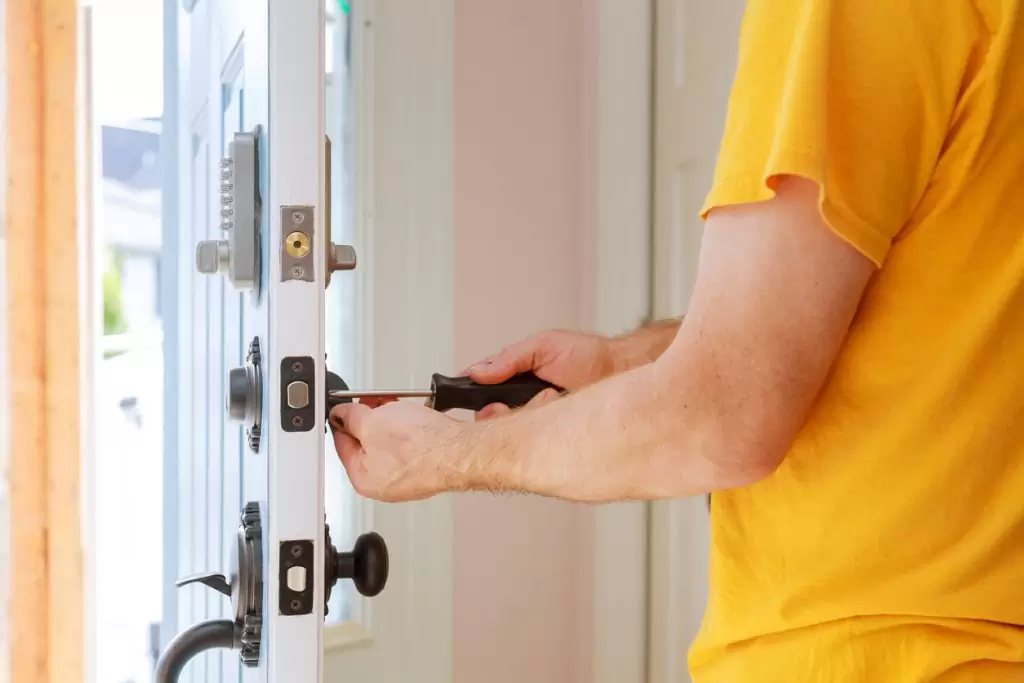
Choosing a lock for the whole door
A lock relies on the door and frame around it. Sound fixing points, appropriate hardware and correct fitting all matter. A stronger lock case cannot by itself restore split timber or compensate for a badly positioned keep.
Also consider how people leave the building. For a flat entrance, fire door or escape route, ask someone competent to confirm that the proposed hardware suits the complete installation. Product fire-test information does not automatically prove suitability for every fire door.
If you rent or live in a managed building, discuss relevant changes with the landlord or managing agent. For a broader review of entrances and other accessible openings, our Home Security Check can help you prioritise practical improvements.
What should a replacement quotation include?
Ask for the proposed model, type, security specification and total price. Confirm the number of keys and whether the work includes the appropriate keep, fixings and necessary door repairs. Explain whether the door currently opens, because gaining access is different from replacing an accessible lock.
After fitting, ask for a demonstration and check the supplied keys. The door should close, latch where applicable and lock without unusual force. Keep the invoice and product details so future enquiries can start with an accurate description of the installed hardware.
For an initial enquiry, a photograph of the door edge and another of the handles can be useful. Include readable manufacturer markings where possible, but avoid sharing detailed photographs of key blades. Keep the lock assembled until any necessary inspection or work is arranged.
Frequently asked questions about mortice locks
Is a mortice lock the same as a nightlatch?
No. A mortice lock is recessed into the door, while a typical rim nightlatch has a case mounted on the inside surface. They may be used together, but each has its own function and specification.
Are all five-lever locks suitable for external doors?
Do not rely on the lever count alone. Check the exact model, intended application and relevant certification, together with any requirements for the property. Correct installation and suitable surrounding materials remain necessary.
Can I replace a deadlock with a sashlock?
Sometimes, but it is not automatically a direct swap. A sashlock requires suitable handle operation and space for its case and latch. The door may need alterations, so assess the existing preparation and condition first.
Can I get extra mortice-lock keys?
Often, yes, depending on the particular system and available service. Ask about the required key type and any copying restrictions. If an existing key is worn or unreliable, explain that before ordering duplicates from it.
Does a closed sashlock mean the door is locked?
Not necessarily. The spring latch may hold a conventional sashlock door closed while the deadbolt remains unlocked. Follow the actual lock’s operating instructions and use the locking function when required rather than assuming latching is enough.
What if the lock is jammed or the door will not secure?
Arrange help rather than forcing the key or dismantling an unfamiliar mechanism. Our Emergency Locksmith service can help with urgent problems. Explain whether you can open the door and whether the property is currently secure.
Get help with mortice locks
Stride Lock & Key can help homeowners in Horley, Reigate, Redhill, Crawley and surrounding areas identify locks and discuss suitable repairs or replacements. Contact us with visible markings and any symptoms, or visit our Knowledge Centre for more guidance on choosing and maintaining door security.