
If your key won’t turn in the lock, stop before applying more force. The problem may involve the key, cylinder, door alignment or connected mechanism. A key that fits into the opening is not proof that the lock is ready to turn, and forcing it can create further damage.
This guide focuses on an intact key that refuses to turn or stops partway through its normal movement. It explains useful observations, simple checks and when to arrange help. If the key has already snapped, use our Broken Key in a Lock guide instead.
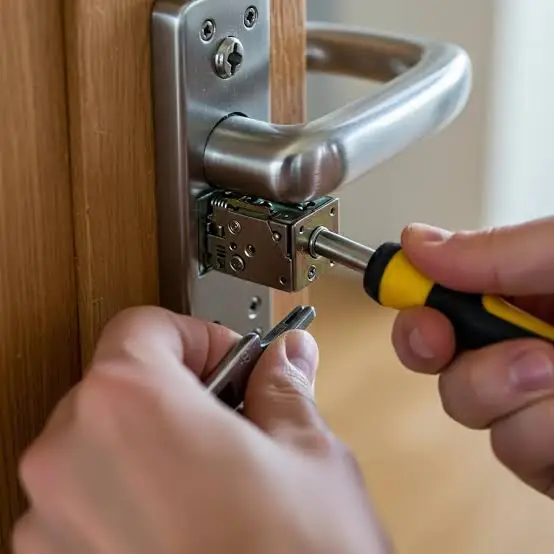
First checks when your key won’t turn in the lock
Confirm that you have the correct key
Start with the simplest possibility, especially if you carry similar keys or have recently had locks changed. Check any label or identification you normally use. A different key can sometimes enter a keyway without operating the mechanism, so insertion alone does not establish that it is correct.
Notice whether the key goes fully in
If the key does not reach its usual position, do not push harder. An obstruction, damaged key or a feature of the cylinder may be involved. Look for obvious damage to the key and visible debris at the opening without inserting tools into it.
Establish whether you are locking or unlocking
Explain which action is failing. A key that will not secure a closed multipoint door presents a different set of clues from one that will not unlock a nightlatch. Note whether the handle has completed its normal movement and whether the door was working earlier.
Also check your immediate situation: are you locked out, unable to secure the house or unable to open an important exit? If access or security is urgent, our Emergency Locksmith service can help assess the required response.
Common reasons a key will not turn
A worn, bent or poorly functioning key
Keys can become damaged or worn, and a newly supplied duplicate may not operate as expected. If you have a known-good spare and the keyway is clear, try it gently. A difference between the two keys is useful information, although it does not prove the lock itself is fault-free.
Do not continue using a key that is visibly bent or cracked. ERA’s cylinder care guidance advises using undamaged keys and avoiding force. Keep an unreliable key separate so another household member does not unknowingly keep trying it.
The locking mechanism has not reached the right position
On many lift-to-lock doors, the handle must complete its movement before the key can secure the system. If hooks or bolts are meeting resistance, the key may refuse to turn even though the cylinder is working. Other mechanisms have different operating sequences.
Follow your door’s instructions rather than forcing the final turn. Our Why Is My uPVC Door Hard to Lock? article explains the connection between alignment, handle movement and locking on common uPVC systems.
Pressure against the bolt or locking points
The door and frame need to meet correctly. Movement, poor alignment or a fitting issue can place pressure on locking components. Notice whether the door has recently started scraping or needing extra effort to close, and tell the locksmith about those changes.
Do not make pushing, pulling or lifting the door harder your permanent solution. It may conceal the cause and add strain. The aim of a repair is smooth operation with proper engagement, rather than a technique that just manages to make the key turn.
A fault inside the cylinder or lock case
Wear, damage or an internal component fault can prevent normal rotation. The visible cylinder is not always the only part involved. A locksmith should identify the affected hardware and assess the mechanism before recommending a replacement.
Our Euro Cylinder Locks Explained guide describes cylinders and their connection to other components. Our Mortice Locks Explained article covers traditional recessed lock arrangements, which require a different assessment.
Could a key on the inside be stopping the outside key?
On some double cylinders, a key left on one side can interfere with operation from the other. This depends on the design and position of the key. Other cylinders offer a function specifically intended to permit operation in that situation.
EVVA describes cylinders with an emergency and danger function that allow operation when a key is inserted on the opposite side. Do not assume your cylinder has that feature merely because both ends have keyholes.
If someone is safely inside and can remove the other key normally, that information may help explain the symptom. Do not force either key. Where this is a recurring concern for carers or trusted keyholders, discuss a suitable operating arrangement with an installer.

Could a nightlatch control be affecting operation?
Some nightlatches have controls that change how the latch or inside handle operates. A snib or deadlocking setting can affect access on certain models. A key that worked previously may seem ineffective because the operating state has changed, rather than because the key is damaged.
Follow the instructions for the exact product. Our Nightlatches Explained article explains why similar-looking controls do not always have the same function. Tell the locksmith about any recent change of setting and any additional lock fitted to the door.
What does partial movement tell you?
A key that will not move at all and one that stops during a turn may have different causes. Explain how far it moves in ordinary terms, whether it catches at the same point and whether you hear or feel the connected mechanism moving.
If the key turns freely but the door stays locked, say that explicitly. That is a different symptom from a key that cannot rotate and may involve the connection or mechanism. Avoid repeated cycling to see if it eventually catches.
These observations help an assessment; they are not reliable instructions for diagnosing an internal part yourself. Stop if the key becomes difficult to withdraw or its movement changes suddenly. A developing fault can be easier to address before a key breaks or the mechanism jams.
Should you compare operation with the door open?
A professional may compare open-door and closed-door operation to investigate alignment or pressure. However, some systems have triggers or interlocks, so they do not behave normally with the door open. A refusal to operate in that state is not automatically a fault.
Report any difference you already know from ordinary use, but do not defeat a trigger or perform unfamiliar tests. Never close the door against extended bolts or hooks. If you are unsure whether everything is retracted, leave the door supervised and seek advice.
What not to do with a stubborn key
Do not use pliers or another tool to increase turning force. A key can bend or snap, leaving a fragment in the lock. Do not strike it, drill the cylinder or insert objects into the keyway in an attempt to free unseen parts.
Avoid spraying several products into the lock. Lubricants have different uses and may not be appropriate for your hardware. Neither oil nor graphite can correct a damaged key, poor alignment or a broken mechanism. Use the manufacturer’s specified maintenance guidance.
Do not loosen cylinder fixings, handles or keeps at random. Changes can affect operation and security together. If the fault started after recent installation work, tell the installer and check any warranty arrangements before authorising unrelated alterations.
Repair or replace: what is the right approach?
The correct work depends on the cause. A key issue may need a correctly supplied replacement key. A door-fit problem may need adjustment. A damaged cylinder or lock mechanism may require a compatible component, rather than changes to every part of the door.
Our Lock Repairs service can help establish what is failing and whether a dependable repair is possible. Ask for the reason behind a proposed replacement, especially if the problem has been described only as “the key won’t turn”.
A security upgrade is a separate decision. If the existing specification also needs improvement, our Lock Upgrades service can help assess options. Installing a higher-rated cylinder will not, on its own, resolve resistance caused by the frame or locking strip.
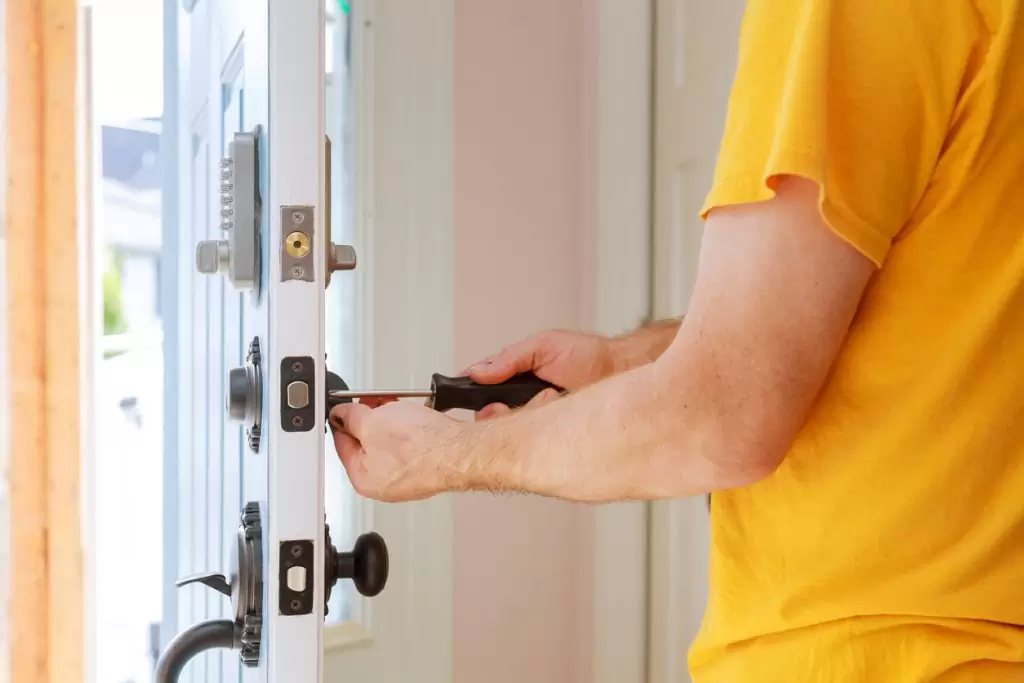
What to tell a locksmith before booking
Explain whether you are inside or outside, whether the door opens and whether the property can be secured. Describe insertion, turning and withdrawal separately. Mention a spare-key comparison, an inside key or a recent change in how the handle behaves.
Share visible manufacturer details and an overall photograph of the lock arrangement if requested. Avoid posting detailed photographs of key blades or security codes publicly. Describe any tools or products already used so the repairer knows the current condition.
Request a clear explanation of attendance, labour and potential parts charges. Ask how additional work would be agreed after inspection. A repair on an accessible door and gaining entry through a jammed closed door may involve different work and cost.
Preventing the problem from returning
After repair, ask for the operation to be demonstrated and try the supplied or retained keys. The door should close and lock without unusual force. Keep the invoice and model details, particularly if the hardware has changed.
Use the handle or designated pull to move the door, keep damaged keys out of use and address new stiffness promptly. Follow product-specific maintenance instructions. If you have broader concerns about entrances or accessible windows, a Home Security Check can help prioritise improvements.
FAQs: when your key won’t turn in the lock
Why does my spare key work but my usual key does not?
The usual key may be worn, damaged or otherwise unsuitable. Stop relying on it and arrange a suitable replacement. The difference is a useful clue, but ask for the lock to be checked if operation with the spare is also becoming unreliable.
Does this mean I need a new door?
Not automatically. Many problems concern a key, fitting adjustment or replaceable component. The condition of the door and frame should be assessed, but an intact key refusing to turn does not by itself justify complete door replacement.
Can I keep wiggling the key until it works?
Repeated manipulation is not a dependable solution. Stop at resistance and investigate the cause, particularly if the problem is worsening. Continuing to force a reluctant key can result in breakage or further damage.
Is the lock secure if the key stops halfway?
You cannot establish that from key position alone. The locking components may not have completed their movement. If you are unsure whether the property is secured, explain the situation and arrange prompt assessment.
Is a thumbturn cylinder always the answer?
No. The right internal operation depends on the door and escape arrangements, and it will not repair a separate mechanism fault. Discuss suitability before changing the type of cylinder, especially on a flat entrance or fire door.
What if I cannot open an essential exit?
Treat the problem as urgent and explain the access situation when seeking help. If someone is in immediate danger, contact the emergency services rather than waiting for a routine repair appointment.
Get help when your key will not turn
Stride Lock & Key can help homeowners in Horley, Reigate, Redhill, Crawley and surrounding areas discuss lock faults and suitable repairs. Contact us with your symptoms, or browse our Knowledge Centre for more practical guidance.