
If your door won’t open even though the key turns, a latch, bolt or another part of the door may still be holding it closed. The cause could involve the handle, locking mechanism, alignment or an obstruction. Turning the key is only one part of opening many door systems.
Stop if normal operation requires force. This guide focuses on a door that remains stuck after an apparent unlocking action. If the key itself refuses to rotate, start with Why Won’t My Key Turn in the Lock?. The distinction helps describe the fault and choose the next step.
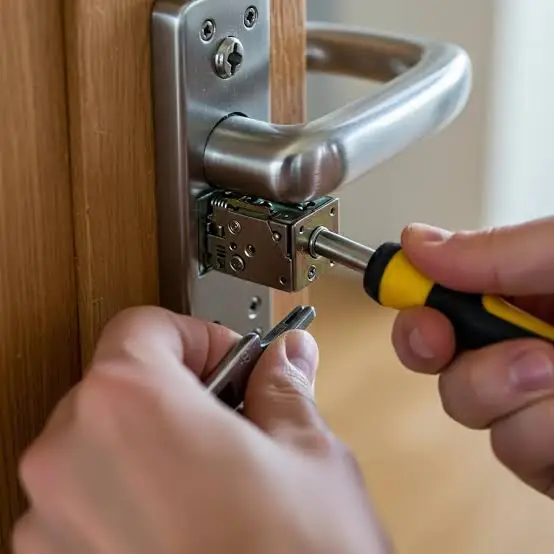
What to check first when your door won’t open
Establish whether anyone needs urgent help
If someone is in immediate danger, such as during a fire, contact the emergency services. Do not wait for an ordinary repair appointment. If an essential exit cannot be used, explain that clearly when seeking assistance, even if another person can enter the property elsewhere.
If there is no immediate danger, establish whether you are inside or outside and whether another normal entrance or exit is available. Our Emergency Locksmith service can help assess urgent access problems. Describe the situation rather than simply saying the lock is broken.
Check the complete locking arrangement
A door may have more than one lock, a chain or another visible securing device. From inside, check whether a familiar additional fastener is still engaged and release it normally if appropriate. Do not attempt to reach or bypass devices from outside.
Make sure you are following the door’s usual opening sequence. Some outside handles do not retract the latch in the same way as the inside handle. If the hardware is unfamiliar, consult its instructions or ask the installer rather than assuming it works like another door.
Why can the key turn while the door stays shut?
The key may unlock one component without withdrawing everything that retains the door. A separate latch may still need normal handle or key operation. On other systems, several locking points need to retract before the door can move.
A turning key can also coexist with a fault in the connection or mechanism. You cannot confirm that every bolt has moved simply from the position of the key. Notice what changes when you operate it, but avoid repeating the action under increasing force.
ERA’s handle guidance explains that some arrangements distinguish between retracting locking points and retracting the latch. This is one reason the exact handle and mechanism combination matters when diagnosing a door that appears unlocked.
Common reasons a door remains stuck
The latch is not retracting
A latch can remain engaged even when a deadbolt is unlocked. The handle, spindle connection or latch mechanism may be involved. A handle that moves unusually freely, droops or fails to produce its normal response is worth mentioning when booking help.
A loose-feeling handle does not prove that replacing the handle alone will solve the problem. The fault may be further inside the lock case. An assessment should establish which component is failing before replacement hardware is selected.
A multipoint mechanism has not released fully
Many uPVC and composite doors use a mechanism with several locking points along the edge. ERA’s multipoint-lock range includes hook, roller and bolt arrangements. A problem affecting one part can prevent the whole door opening normally.
If the handle stops partway through its usual movement, or the door seems held at one position, describe that observation. Do not pull harder to make remaining points release. A jammed closed mechanism can require a different approach from a repair on an open door.
The door is binding against the frame
A door can remain difficult to move even when its locking components are released. Alignment, hinge condition, movement in the door or frame and pressure at the seals may be relevant. Previous scraping or increasing effort to close it can provide useful context.
Our Why Is My uPVC Door Hard to Lock? guide covers related fitting problems. A door that has gradually become reluctant to lock may eventually be difficult to open too, so early symptoms deserve attention.
An obstruction is preventing movement
A visible mat or loose item can interfere with a door’s travel. If an obstruction is accessible from your side, remove it only where that can be done without forcing the door or placing fingers in a closing gap. Do not push tools through concealed spaces.
If you cannot see the cause, avoid guessing that a harder push will clear it. An obstruction behind the door, a hardware fault and a binding frame can feel similar from the other side. Tell the repairer what you can actually observe.

Does the type of door change the likely problem?
uPVC and composite entrance doors
The cylinder, handle, central mechanism and additional locking points work together on many of these doors. A cylinder is only one component. Our Euro Cylinder Locks Explained article explains why changing it does not automatically repair the rest of the system.
Timber doors with mortice locks
A mortice sashlock has both a latch and locking bolt, while a deadlock may operate alongside a separate latch. Establish which component you have unlocked. Our Mortice Locks Explained guide helps identify those arrangements without dismantling the case.
Doors with nightlatches
Nightlatch operation can depend on the model and selected controls. Some settings affect the latch or internal release. Our Nightlatches Explained article covers those differences. Mention any separate mortice lock, chain or recent change in the controls when seeking advice.
Sliding or double doors
Sliding doors add rollers and tracks to the assessment, while double doors may require a particular leaf-opening sequence. Follow the manufacturer’s operating instructions. Do not lift a heavy leaf, remove glazing or force the normally inactive door to move as a substitute for diagnosis.
Useful observations before calling
Note whether the key turns normally, partly or unusually freely, and whether the handle moves through its familiar range. Say whether the door moves slightly or remains completely still. These observations are more useful than confidently naming an unverified broken part.
Mention any earlier stiffness, scraping, unusual sound, recent installation work or weather pattern. Also explain whether the problem began while locking, unlocking or closing the door. A sudden change and a gradually worsening problem may call for different checks.
Visible branding or a photograph of the overall handle and lock arrangement can help an initial enquiry. Do not dismantle covers to obtain a model number or post detailed key-blade images publicly. A photograph supports identification but cannot reveal every internal fault.
What should you avoid doing?
Do not kick or shoulder the door, use excessive leverage on the handle or twist the key with pliers. This can damage the door, frame or mechanism and cause injury. A stuck door is a reason to stop applying force, not to increase it.
Avoid removing hinges, loosening random fixings or inserting tools into the frame gap. The door may be heavy, and changing one component can affect how it is supported or secured. Destructive attempts may also complicate the work needed to restore it afterwards.
Do not flood the lock with an unspecified lubricant. Lubrication may be appropriate maintenance for certain parts, but it does not release every jam or correct misalignment. Follow instructions for the actual product rather than mixing sprays in an attempt to reach an unseen cause.
Can a locksmith open the door without damage?
A locksmith can assess the door, identify the likely fault and consider suitable opening methods. The available options depend on the hardware, its condition and which parts remain engaged. Damage-free opening cannot be promised for every failed or jammed mechanism.
Explain the access situation when booking and ask how the work will be assessed. If a method will require replacement parts or affect the door, ask for that to be explained before proceeding. The aim is to regain access and restore dependable operation.
Gaining entry and completing the repair may be separate stages. A door can open after the obstruction is resolved yet still need a compatible mechanism or fitting correction. Ask whether the property will be secured if parts need to be obtained.
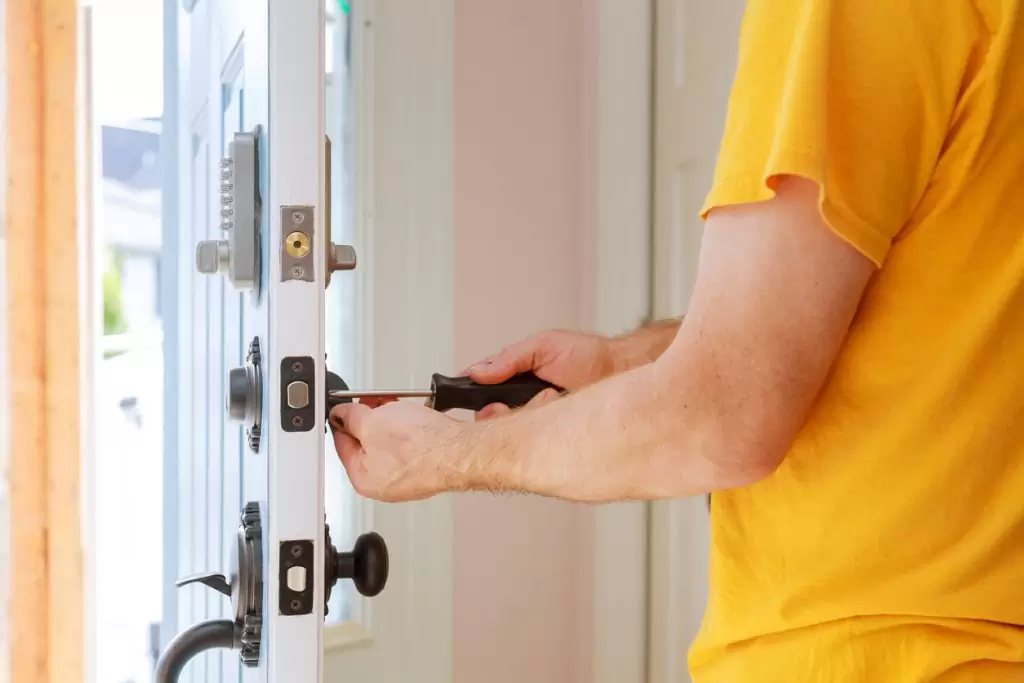
What happens after the door is opened?
The original cause should be investigated before the door is returned to normal use. Inspection may reveal a handle or latch problem, a mechanism fault, alignment concerns or more than one issue. Do not assume that opening it once means it is fixed.
Our Lock Repairs service can help assess repairable faults. If replacement is needed, ask which component requires changing, how compatibility is confirmed and whether surrounding damage needs attention. A whole new door is not automatically necessary.
Security improvements are a separate consideration. Our Lock Upgrades service can help where appropriate, but a higher-rated cylinder will not correct binding hinges or a failed locking strip. The repair should address the reason the door became stuck.
Questions to ask about the repair
Request an explanation of attendance, opening, labour and parts charges. Confirm how additional work discovered after access would be agreed. An accessible adjustment and a jammed-door opening are different jobs, so generic starting prices may not describe your situation.
After repair, ask for a demonstration of opening, closing and locking. Check that everyone who regularly uses the entrance understands its operation. Keep the invoice, model details and any maintenance instructions, particularly if a different mechanism or handle arrangement has been fitted.
For a flat entrance or fire door, the work must preserve its required function and suitable escape arrangements. Involve the landlord or managing agent where appropriate. A broader Home Security Check can help review other entrances if you have additional concerns.
FAQs: when your door won’t open
Does a turning key prove the lock is unlocked?
No. It does not establish that every latch or locking point has retracted. Describe the key movement alongside the handle response and door movement. The complete mechanism needs to be considered.
Should I keep trying if the door sometimes opens?
Intermittent operation deserves an assessment before it becomes a complete failure. Do not rely on repeated force or a special lifting technique. Report when it works and when it sticks so the cause can be investigated.
Will changing the cylinder fix a stuck door?
Only if that component is the relevant cause and the replacement is suitable. A cylinder change will not repair a latch connection, release a failed locking strip or correct a binding frame. Diagnosis should come first.
What if the key breaks while I am trying?
Stop using it and avoid pushing another key into the blocked opening. Keep the piece you have and tell the locksmith. Our Broken Key in a Lock guide explains the next steps.
Can I leave the door once it has finally opened?
Do not return a known faulty door to ordinary use without understanding the problem. It may jam again or fail to secure. Keep it supervised while arranging appropriate help, particularly if closing it could leave someone without usable access.
Is a stuck door always an emergency?
Urgency depends on access, security and whether anyone is at risk. An unusable essential exit or inability to secure the home requires prompt attention. Explain the circumstances when booking so the response matches the situation.
Get help with a door that stays stuck
Stride Lock & Key can help homeowners in Horley, Reigate, Redhill, Crawley and surrounding areas assess stuck doors and discuss suitable repairs. Contact us with the access situation and symptoms, or visit our Knowledge Centre for more practical guidance.