
If you are locked out of your house, start by checking whether anyone is at risk and whether a trusted keyholder can help. Avoid forcing the door or climbing to an opening. A calm description of what happened will help a locksmith assess access and explain the likely work.
This guide covers everyday domestic lockouts: keys left inside, missing keys and doors that no longer open normally. It explains what to check, what information to have ready and which questions to ask before booking. The appropriate solution depends on the door, lock and circumstances.
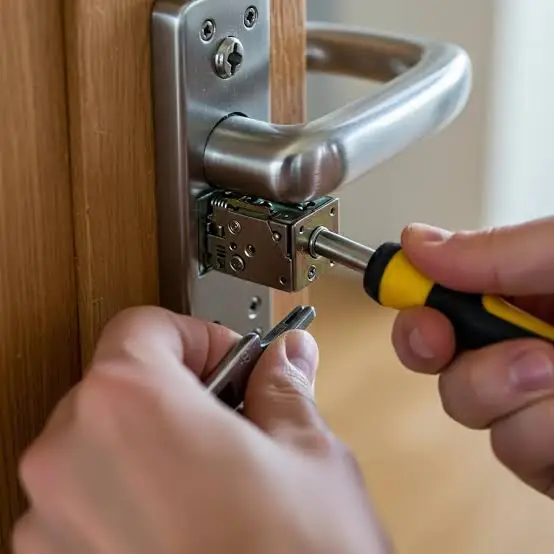
Locked out of your house? Check safety first
If someone is in immediate danger, contact the emergency services. A fire, serious medical emergency or other immediate threat requires a different response from an ordinary lockout. Do not delay emergency help while comparing repair prices.
If a child or vulnerable person is inside, explain their situation when seeking assistance. The urgency depends on their condition and any hazards, not simply their presence. Stay somewhere safe and maintain contact where possible while appropriate help is arranged.
If there is no immediate danger, consider the weather, your phone battery and somewhere safe to wait. A trusted neighbour or nearby public place may be useful. Tell the attending locksmith where you will be and how to reach you.
Check for an ordinary way back in
Contact a trusted keyholder
Ask whether a household member, relative or other authorised keyholder can bring a working spare. Confirm their availability and realistic arrival time before making another arrangement. A spare key is useful only if the lock can still operate normally.
Consider another normal entrance
If you have authorised access through another door using its normal operation, that may resolve the situation. Do not climb, remove panels or try to reach internal controls through openings. Avoid turning a lockout into an injury or damage to the property.
Check who else may manage access
If you rent, contact the landlord or managing agent where appropriate. In a managed building, ask about the relevant access procedure. A communal entrance and your own flat door may involve separate arrangements, so explain precisely where you are unable to enter.
If help from a keyholder is sufficient and a locksmith has already been booked, contact the business promptly. Check any agreed cancellation or attendance terms rather than assuming that the visit will automatically stop.
Work out what caused the lockout
The door closed with the keys inside
A nightlatch or another self-latching arrangement may prevent outside entry after the door shuts. Tell the locksmith whether you turned a key to secure any additional lock before leaving. Our Nightlatches Explained guide covers why closing and fully locking are not always the same action.
Your keys are missing
Think about whether the keys are simply elsewhere or could be in someone else’s possession. Regaining entry and deciding whether to change access are separate questions. Explain any concern that lost keys might be associated with your address.
The key or lock has stopped working
Describe whether the key inserts, turns or withdraws normally. Our Why Won’t My Key Turn in the Lock? article explains useful observations. If the key turns but the door remains shut, see Why Won’t My Door Open?.
The key has broken
Stop trying to use the remaining piece and do not push another key into the blocked keyway. Keep the part you have and tell the locksmith what happened. Our Broken Key in a Lock guide explains why further force can complicate the repair.
What to tell the locksmith when you call
Give the address and postcode, a contact number and your current location. Explain whether anyone is inside, whether another entrance is usable and whether there is an immediate access concern. These details help establish the situation before discussing the lock itself.
Describe the door material, visible lock arrangement and any brand markings you can see safely. Say whether the handle lifts, whether there is a separate mortice lock and whether the key is still on the inside. Do not dismantle anything to obtain a model number.
A photograph of the overall handle and lock may help an initial enquiry. Avoid publicly sharing detailed key-blade images or security codes. A photo supports identification but cannot guarantee which opening method or replacement part will be needed.
Mention previous stiffness, recent work and anything already attempted. If glue, sprays or tools have been used, explain that clearly. Accurate information is more useful than trying to make the fault sound simpler in the hope of obtaining a lower estimate.

Ask clear questions about price and attendance
Ask who will attend, the estimated arrival time and what the quoted price includes. Distinguish attendance, opening, labour and possible replacement parts. Confirm the total payable, including VAT where applicable, and how additional work would be agreed.
A “from” figure may not describe the final job. The Master Locksmiths Association’s advice on choosing a locksmith recommends checking quotations and being cautious about very low advertised prices. Compare the actual scope when circumstances allow.
Arrival estimates can change, so ask how updates will be communicated. Do not assume a published emergency service description guarantees a particular response time. Keep your phone available and provide any building-entry directions that the attending person will need.
If you want an insurer or assistance provider to cover the work, contact that provider about its process where practical before booking. Do not assume a lockout is covered or that any invoice will be reimbursed. Keep the agreed scope and an itemised invoice.
How will the locksmith check your authority to enter?
Expect to be asked how your right to access the property can be established. The exact evidence and process may vary. Explain early if identification or tenancy paperwork is locked inside, so the locksmith can discuss appropriate verification rather than discover the issue on arrival.
Available evidence might include identification, address records or confirmation through an appropriate property contact, depending on the circumstances. Do not assume one document automatically resolves every situation. The attending professional needs to be satisfied that the requested access is authorised.
Where access is disputed, explain that honestly and seek the appropriate advice. A locksmith visit should not be used to resolve a disagreement about who is entitled to occupy a property. Clear communication protects both the occupant and the person carrying out the work.
Can the door be opened without damage?
Non-destructive entry may be possible, but it cannot be promised for every lockout. The lock type, additional security, fault and condition all affect the options. A door with a failed mechanism presents a different job from an otherwise serviceable door that has simply latched shut.
Ask for the proposed approach to be explained. If a method will damage a component or require replacement, discuss the reason and resulting work before proceeding. The MLA’s consumer guidance notes that drilling may sometimes be necessary, while warning against unexplained assumptions that it must be the first option.
Do not judge the whole job solely by whether a drill is used or how quickly entry is achieved. What matters is an appropriate assessment, clear explanation and agreed work. A damaged or unusually secure installation can require a different approach from a simple lockout.
Do you need the lock changed afterwards?
Not automatically. If keys were left inside and the lock remains sound, entry may be all that is needed. If the key is missing, the hardware is damaged or operation remains unreliable, discuss the relevant repair or access change.
Our Lock Repairs service can help with faults, while Lock Upgrades covers improvements where the existing specification warrants a change. Do not assume every lockout requires an upgrade, but do not overlook an unresolved fault either.
If replacement is proposed, ask which component will change, which keys will work afterwards and what documentation will be supplied. Our Euro Cylinder Locks Explained guide helps distinguish a cylinder replacement from work on the connected mechanism.
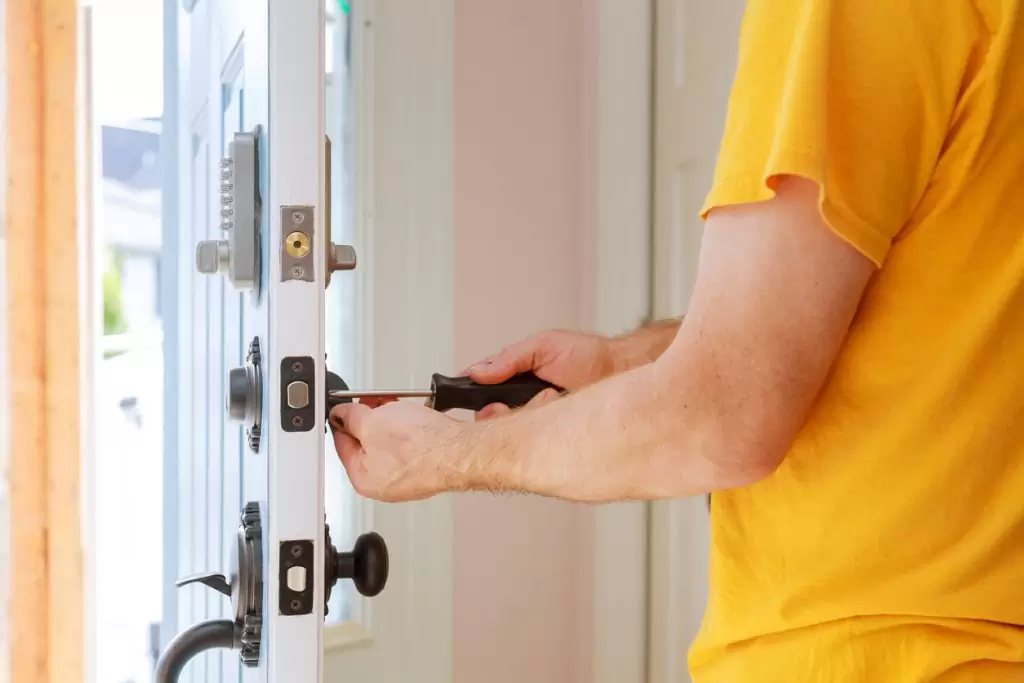
What should happen before the job is complete?
Have normal opening, closing and locking demonstrated. Try the retained or newly supplied keys and ask about any change in operation. If the original fault was intermittent, describe when it normally occurs so the check is not limited to one successful turn.
Confirm that the property is secure, or understand any agreed temporary arrangement if further parts are needed. Keep the invoice, model details and instructions. Ask who to contact if the same symptom returns or if you have difficulty using the new arrangement.
Reduce the chance of another lockout
Build a simple key check into your leaving routine. Keep an appropriate spare arrangement with someone you trust and review it when access needs change. Avoid hiding a key close to the entrance or giving copies to people who no longer need them.
Address new stiffness before it becomes a failure. Use the handle or designated pull to move the door rather than pulling on the key. If an inside key has caused repeated access difficulties, discuss whether a suitable alternative cylinder function would help.
Our Home Security Checklist can help review routines and hardware together. For a wider assessment, consider a Home Security Check. Convenience should be balanced with appropriate protection and escape arrangements.
Locked out of your house: frequently asked questions
Should I break a window to get in?
For an ordinary lockout, avoid breaking glass or forcing entry yourself. Injury, damage and securing the opening afterwards can create further problems. If someone is in immediate danger, contact the emergency services and follow their instructions.
Can a spare key work if another key is inside?
That depends on the cylinder and key position. Do not force the spare if it will not operate normally. Tell the locksmith about the inside key so it can be considered in the assessment.
What if my identification is locked inside?
Explain this during the initial call. The locksmith can discuss how your authority may be established in the circumstances. Do not wait until arrival or assume verification will be unnecessary.
Will I need a completely new door?
A lockout alone does not establish that. Many situations involve opening or work on a component. Wider damage or defects may require additional repairs, but the assessment should explain why they are needed.
Can I get a fixed price over the phone?
Sometimes enough information is available, while other situations require inspection. Ask which parts of the quotation are confirmed and what could change it. Agree how additional work and charges will be discussed.
Is an emergency locksmith always the first call?
A trusted keyholder may resolve an ordinary lockout. A managing agent may have a relevant procedure. If there is immediate danger, emergency services take priority. Choose the response around access, safety and the condition of the lock.
Get help when you are locked out
Stride Lock & Key helps homeowners in Horley, Reigate, Redhill, Crawley and surrounding areas discuss lockouts and suitable repairs. Visit our Emergency Locksmith page or contact us with your access situation. Our Knowledge Centre contains more practical guidance for common lock problems.