
Lock upgrade vs lock replacement is a useful distinction when you move house. Replacing a lock can stop previous keys working, while upgrading aims to improve the security specification. One job can achieve both, but a new lock is not automatically a stronger lock.
The right choice depends on your existing door, the condition of its hardware and what you want to change. This guide helps you compare the options, ask useful questions and plan the work without assuming that every component needs replacing.
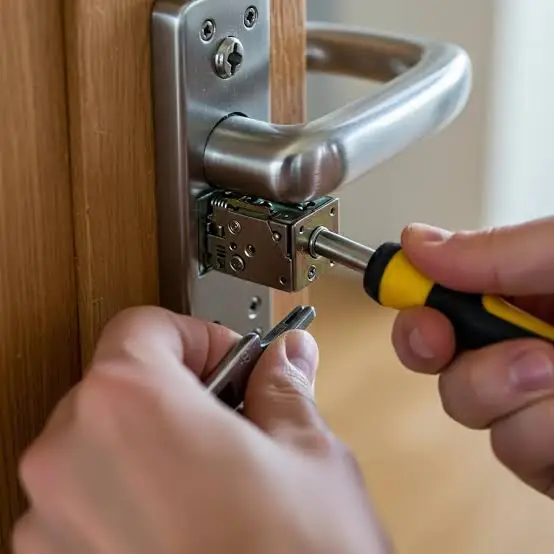
Lock upgrade vs lock replacement: what is the difference?
Replacement changes a component
A replacement removes an existing lock or keyed component and fits another. It may be needed because keys are unaccounted for, the component is worn or the lock has failed. A replacement with a different key combination can reset access without necessarily increasing resistance to attack.
An upgrade improves the specification
An upgrade introduces a suitable improvement over what is already fitted. That might involve a cylinder with independently tested attack resistance, compatible protective furniture or an appropriate replacement lock. The improvement should be identifiable, rather than simply described as “premium” or “high security”.
The work can overlap
Replacing an unsuitable cylinder with a correctly fitted, higher-specification model can provide new keys and improve protection at the same time. Conversely, changing damaged hardware for the same suitable specification may restore reliable operation without being a security upgrade. Ask which outcome the proposed work delivers.
Start with the reason you want the work done
After moving, the immediate concern is often control of access. A functioning lock does not tell you who holds working copies of its key. Our How Many Keys Could Still Exist? guide explains why the number handed over cannot establish the complete copying history.
Other concerns need a different assessment. A door that catches, a stiff handle or a key that needs repeated attempts may indicate wear, alignment problems or a mechanism fault. Fitting a stronger cylinder alone will not necessarily resolve those issues.
Describe the symptoms and your priorities when enquiring. “I want previous keys to stop working” is different from “the back door will not secure”. If both apply, explain both. This helps the locksmith assess the required work and distinguish necessary repairs from optional improvements.
When a suitable replacement may be enough
If the door operates correctly and already has appropriate hardware, changing the keyed component may be a reasonable way to regain control of access. There may be no benefit in discarding a serviceable handle or complete locking mechanism solely because you have moved.
For example, a compatible replacement cylinder can be considered for a sound euro-cylinder installation where the main concern is unknown keys. The existing specification should still be checked; replacing a good cylinder with a lower-specification product would be an avoidable step backwards.
Our guide to changing locks after moving house covers the access decision. Keep a record of which locks are changed. Old keys can remain usable at any other entrances that retain the same key combination.
When an upgrade deserves consideration
An upgrade is worth discussing where the existing specification is inadequate for the installation or a suitable improvement can address an identified weakness. Assess the lock alongside the handles, fixings, door and frame. A strong component cannot compensate for every weakness elsewhere.
For euro-cylinder installations, Police.uk’s door and window lock advice recommends a TS007 three-star cylinder when changing this type of lock. The selected product must also fit and operate correctly in the particular door.
The Master Locksmiths Association’s anti-snap guidance explains recognised options, including a three-star cylinder or a compatible one-star cylinder with two-star protective furniture. A one-star cylinder alone should not be treated as the equivalent of a three-star cylinder.
Our Anti-Snap Locks Explained article explores these choices. Ask for the exact model and certification in the proposal, and avoid treating an “anti-snap” label as a guarantee that the whole door cannot be defeated.

Does replacing a lock mean replacing the whole mechanism?
Not always. On many doors, the part accepting the key is separate from the mechanism that secures the door. A suitable cylinder change can therefore leave the mechanism in place. Other designs require different parts and methods, so the door needs identifying before the scope is confirmed.
A multipoint system may have hooks, bolts or rollers operating along the door edge. Those parts and the cylinder have different jobs. Replacing one does not automatically repair the other. Our Euro Cylinder Locks Explained guide introduces the distinction.
On timber doors, a mortice lock or nightlatch may need a different approach. Avoid choosing a replacement by appearance alone. Dimensions, operation, existing preparation and compatibility affect whether a component is suitable and how much work is involved.
Repair faults before assuming stronger hardware will help
A door that needs lifting or pushing to lock deserves investigation. Forcing the handle or key can make an existing problem worse. Tell the locksmith whether the difficulty occurs consistently and whether anything changed recently, such as the door beginning to rub against its frame.
Depending on the cause, the answer may involve adjustment, repair or replacement of a worn mechanism. Our Why Is My uPVC Door Hard to Lock? guide explains common symptoms, and our Lock Repairs service covers assessment of troublesome locks.
Once the door works properly, you can consider whether the security specification also needs improving. A useful quotation explains both pieces of work separately so you can see what restores operation and what adds protection.
Consider everyday use and safe exit
The household must be able to use the finished installation reliably. Discuss who uses the door, any difficulty turning keys or handles, and how the door is opened from inside. More hardware is not automatically a better solution if it creates awkward or unsuitable operation.
Fire doors, flats and shared entrances require particular care. Confirm the applicable building requirements and appropriate authority before making alterations. A proposed change should preserve the door’s required performance and escape arrangements, rather than focusing only on the key or cylinder.
Check your own insurance documents if they specify locks or security measures. Do not assume a generic product description meets your policy. Where wording is unclear, ask the insurer to clarify the requirement before selecting the replacement.
Compare quotations by scope as well as price
Ask which doors and components are included, the product specification, the number of keys supplied and whether any repairs are additional. Photographs of the door and visible fittings can help an initial enquiry, although inspection may still be needed before suitable parts are confirmed.
A lower figure may cover a cylinder only, while another includes protective furniture or mechanism repairs. Compare like-for-like work and ask what remains unchanged. You should be able to identify the access change, any security improvement and any unresolved fault.
Stride Lock & Key charges
Our call-out charge is £50 between 08:00 and 20:00 and £150 between 20:00 and 08:00, seven days a week. Labour is charged separately at £30–£75 per hour depending on the job, with a one-hour minimum. Parts are charged separately. No VAT is charged.
Blue Light Card or Defence Discount Card holders receive 10% off labour. The discount applies to labour only; call-out charges and parts are excluded. Mention your card when enquiring so the estimate can reflect the applicable labour discount.
For illustration, a daytime visit with one hour of labour at £30 would be £80 before parts. With the eligible labour discount, that example becomes £77 before parts. This is an example using the lowest stated labour rate, not a fixed price for a lock change.
Read our Locksmith Cost Guide for the charging structure, and confirm the expected work and costs when booking. The number of doors, selected components and any underlying faults affect the total.
Plan the work around your move
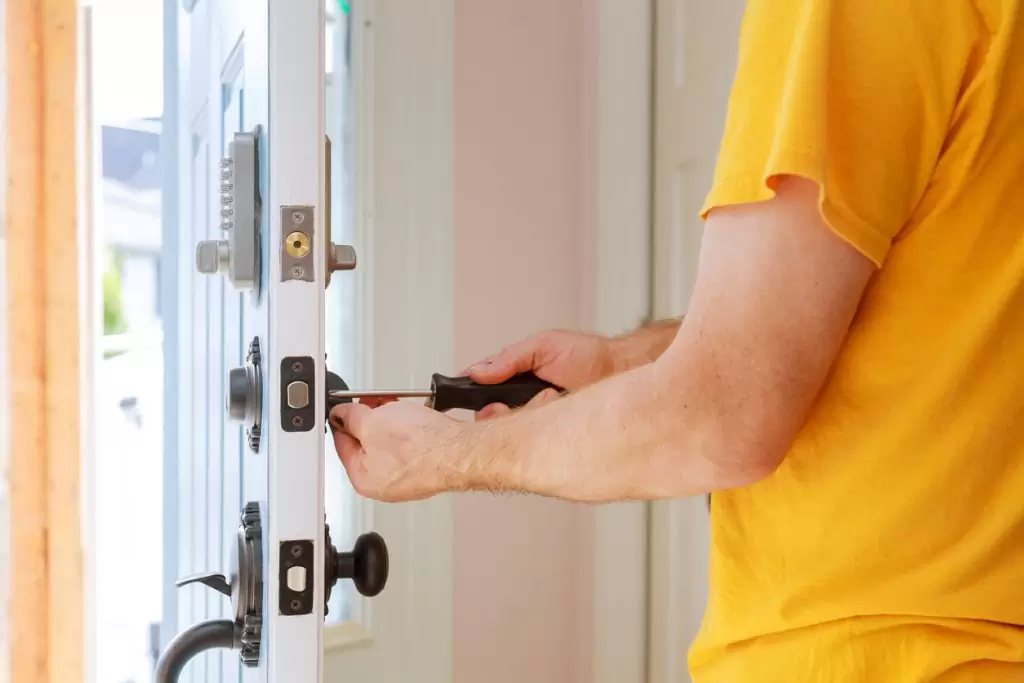
Arrange access only once you are entitled to authorise the work, and coordinate the visit with the confirmed handover. If you are renting, discuss the proposed changes with your landlord or managing agent and establish the relevant arrangements before booking.
Review the back door, side entrances and garage as well as the front door. If the budget requires stages, agree which concerns take priority and which existing keys will remain usable. Our Moving House Security Checklist helps organise the wider checks.
At completion, ask for a demonstration of normal locking and unlocking, confirm which keys operate each entrance and keep the product information. Store spares securely and record who receives them. These small steps help maintain control after the installation.
If several options are offered, ask for a clear explanation of the difference in parts and labour. Keep the agreed scope with your receipt so you can refer to it later. This is particularly useful when work is spread across more than one visit or entrance.
Frequently asked questions
Is lock upgrade vs lock replacement an either-or choice?
No. A replacement can also be an upgrade when the new component improves on the old specification. Ask whether the proposed work changes key access, improves physical protection, fixes a fault or combines those outcomes. The label alone does not explain the benefit.
Can I keep my existing handles?
Possibly, if they are compatible, serviceable and suitable for the intended installation. Some security approaches involve protective furniture, while others rely on the cylinder’s own tested performance. The correct answer depends on the complete arrangement rather than the appearance of the handles.
Is rekeying the same as upgrading?
No. Where a lock can be suitably rekeyed, its working key combination changes. That can address old-key access, but it does not automatically improve resistance to attack or repair wear. Availability and value depend on the lock design and condition.
Will one new lock stop every old key working?
Only at the lock whose key combination has changed. If the old key also operates an untouched back door or garage, it may still work there. Tell the locksmith about shared-key arrangements and confirm the scope across all relevant entrances.
Must I replace the complete door?
A lock change alone does not normally mean replacing the door. However, significant damage or an unsuitable door assembly can limit what hardware changes achieve. An assessment should explain whether the existing door can support the intended repair or improvement.
What if the door cannot be secured today?
Explain that when enquiring so the immediate problem can be assessed. Our Emergency Locksmith service can discuss the situation and appropriate work. A fault preventing secure closure should be made clear before treating the job as a routine upgrade.
Choose the right work for your new home
Stride Lock & Key helps homeowners in Horley, Reigate, Redhill, Crawley and surrounding areas consider suitable Lock Upgrades and replacements. Contact us to discuss your doors, arrange a Home Security Check or visit our Knowledge Centre for more practical advice.