
This moving house security checklist helps you organise keys, check the new property and establish a dependable first-night routine. Moving day brings unfamiliar doors, several people coming and going, and plenty of distractions. A short plan helps keep access and security clear while everything else is being unpacked.
Work through the stages before handover, on arrival and during the first week. Record anything uncertain rather than assuming that a handed-over key or working app tells the whole story. For the specific decision about replacing locks, read Should You Change Your Locks After Moving House?.
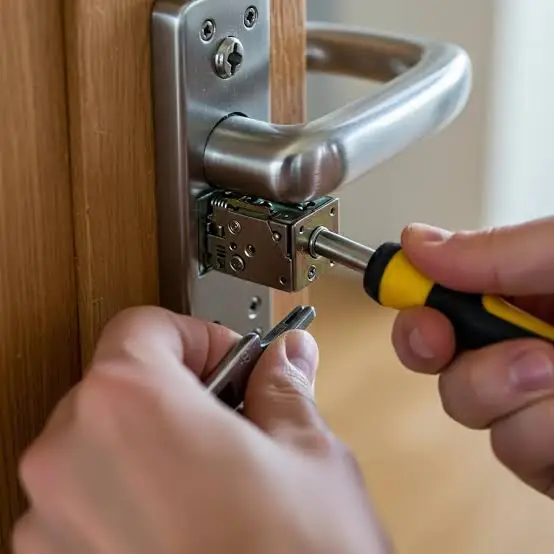
Moving house security checklist: before handover
- ☐ Confirm how and when authorised access will be handed over.
- ☐ Ask for a list of keys, fobs, remotes and security equipment.
- ☐ Request lock, alarm and connected-device documentation.
- ☐ Note known faults that need assessment or clarification.
Ask about front and back doors, garages, outbuildings, windows and shared entrances. A large bunch of keys is easier to understand when each item has a purpose. Request clarification before moving day where possible, rather than discovering an unidentified key when you need to secure the property.
Do not arrange changes to a property before you are entitled to authorise them. Coordinate any planned locksmith visit with the confirmed handover and your access arrangements. If you are renting, discuss proposed changes and reporting procedures with the landlord or managing agent.
Collect and identify the keys
- ☐ Match supplied keys to the relevant doors and windows.
- ☐ Check that normal operation is understood, without using force.
- ☐ Record the number of keys, fobs and remotes received.
- ☐ Keep keys secure during unloading and unpacking.
Test only through normal operation and stop at unusual resistance. A key that enters the keyway does not necessarily operate the lock. If a key appears damaged or an unfamiliar mechanism will not move, note the issue and seek advice rather than repeatedly trying harder.
Avoid attaching the full address to a portable keyring. The Metropolitan Police’s flat-security guidance advises against address labels on keys and fobs. A private record can help you organise access without putting the location on something easily lost.
Decide how to handle unknown key copies
Receiving all the keys available at handover does not prove that no other copies exist. Previous occupants may have shared access over time. That uncertainty is not an accusation of wrongdoing, but it is a reasonable factor when deciding how to manage your new home.
Our moving-house lock-change guide explains the options. Depending on the installation, changing the keyed component may allow suitable surrounding hardware to remain. A security improvement and a change of key access are related but different decisions.
If you arrange replacement, confirm which doors are included and what old keys will still operate afterwards. Include secondary entrances in the discussion rather than assuming the front door is the only relevant access point. Ask how many new keys are supplied and how extras are obtained.
Keep the property supervised on moving day
- ☐ Agree who is responsible for the entrance while unloading.
- ☐ Keep bags, keys and important documents away from open doors.
- ☐ Avoid leaving another entrance unattended while working elsewhere.
- ☐ Confirm who will complete the final lock-up.
A busy move can make it hard to distinguish expected visitors from other callers. Agree arrangements with your removal team and household, and confirm unexpected requests for access. Do not leave keys outside simply because several people are arriving at different times.
Take care with doors that latch automatically. Keep your key with you and understand the normal opening sequence before stepping out. Our Nightlatches Explained guide covers why pulling a door closed can leave you unable to re-enter without a key.
If you do become locked out, avoid climbing or forcing an opening. Our Locked Out of Your House? article covers practical first steps. Explain the handover situation and your authority to access the address when booking assistance.
Check doors before the first evening
- ☐ Confirm each external door closes and secures normally.
- ☐ Look for visible damage or loose fittings.
- ☐ Learn the required handle, key and thumbturn sequence.
- ☐ Record any door that cannot be secured or used reliably.
Inspect from a safe position without dismantling hardware. A door that needs pushing or lifting deserves attention, even if the key eventually turns. Our Why Is My uPVC Door Hard to Lock? guide explains why alignment or mechanism problems may be involved.
The type of door does not establish the cylinder specification. Our Euro Cylinder Locks Explained guide can help you identify common components. Where an upgrade is being considered, our Best Locks for Front Doors article explains why compatibility matters.

Check windows and outside storage
- ☐ Locate the keys or controls for accessible windows.
- ☐ Check garages, sheds and side gates as well as the house.
- ☐ Secure tools and ladders after unloading.
- ☐ Note missing keys or damaged fittings for follow-up.
An unfamiliar window behind stacked furniture is easy to overlook. Check rooms systematically while access is still clear. Do not assume the previous occupant closed or locked every opening, or that a window held partly open is equivalent to one secured closed.
Keep moving equipment and boxes away from routes you need to use. Do not add window locks, bars or restrictors without considering the opening’s required escape function. A suitable assessment can help distinguish a useful improvement from an alteration that creates another problem.
Take control of alarm access
Ask for the alarm model, operating instructions and details of any service or monitoring arrangement. Establish who owns the account and what needs transferring. A code written on a piece of paper is not a complete handover of a monitored or connected system.
Follow the provider’s process for updating authorised users, contact details and codes. Confirm normal setting and unsetting before relying on the system overnight. Avoid random resets or button combinations on unfamiliar equipment; an installer or service provider may need to help.
If a previous occupant or contractor had access, clarify how that access is removed appropriately. Do not assume that changing one code changes every account or response contact. Record the completed arrangements securely rather than leaving codes beside the control panel.
Review smart locks, cameras and other connected devices
- ☐ Identify which devices are included in the handover.
- ☐ Use the manufacturer’s ownership-transfer procedure.
- ☐ Confirm that previous account access has been removed.
- ☐ Review passwords, updates and supported security settings.
A device that responds to your phone may still be associated with another account. Ask for a proper transfer rather than sharing the previous owner’s login. Follow manufacturer instructions for any necessary reset and check the device’s operation afterwards.
The National Cyber Security Centre’s smart-device guidance recommends updates and enabling two-step verification where offered. Check support availability and remove remote access you do not need using the supported settings.
For inherited cameras, review the actual view, audio and recording arrangements before use. Our Home CCTV Explained guide covers practical and privacy considerations. Do not assume that the previous installation or configuration automatically suits your needs.
Your first-night security routine
- ☐ Complete a final check of doors, windows and outside storage.
- ☐ Keep essential exits and internal routes clear of boxes.
- ☐ Make sure household members can operate the relevant locks.
- ☐ Agree a secure, accessible place for everyday keys.
Balance security with safe exit. People should understand how to leave without searching through packing boxes or unfamiliar controls. Flat entrance doors and other fire doors require particular care; do not change their operation without confirming that the complete arrangement remains suitable.
If an entrance cannot be secured, seek help rather than relying on an improvised barrier. Our Emergency Locksmith service can assess urgent lock problems. If someone is in immediate danger, contact the emergency services rather than waiting for routine attendance.
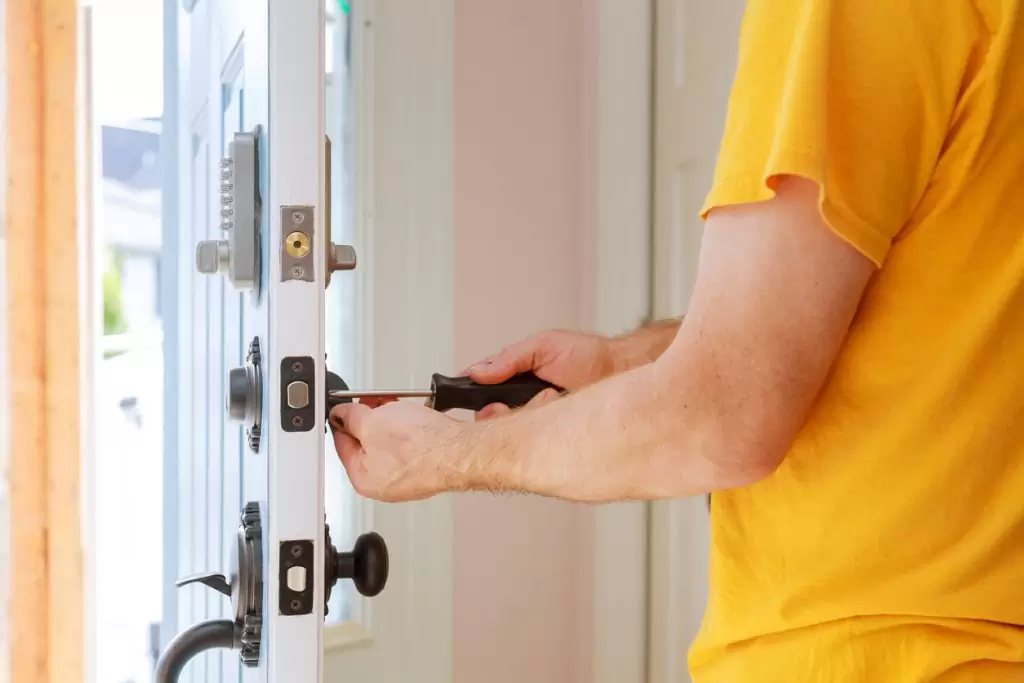
Prioritise repairs during the first week
Separate immediate faults from optional improvements. Our Lock Repairs service can help assess unreliable hardware, while Lock Upgrades covers changes where better protection is appropriate. Ask why each proposed job is needed.
For a planned visit, gather visible model details and describe symptoms clearly. Request the scope, parts and total charges. Our Locksmith Cost Guide explains our attendance fees, labour minimum, separate parts and eligible cardholder labour discount.
Check your insurance documents and ask the insurer about any uncertain security requirement. Identify the fitted hardware rather than guessing from its appearance. Keep invoices and product details for work completed, including any instructions on operation and maintenance.
Set up lasting access arrangements
Decide who needs a spare and record temporary access for ongoing work. Agree how keys will be returned or digital permissions removed when that work finishes. Avoid letting short-term arrangements become indefinite because everyone is busy settling in.
For flats, distinguish private-door keys from communal fobs or shared systems. Report faults through the relevant building-management route rather than changing shared access equipment yourself. Ask how missing or surplus fobs are handled.
Once the initial move is complete, use our Home Security Checklist for a broader review. This lets you consider lighting, boundaries and other improvements after urgent access and first-night needs have been addressed.
Moving house security checklist FAQs
Should locks always be changed on moving day?
Unknown copies are a reason to consider changing access, but the practical arrangements depend on the property and authority to make changes. Plan the assessment and timing rather than assuming every component must be replaced immediately.
What if the keys handed over do not work?
Contact the relevant handover party and explain exactly which entrance is affected. Avoid force or dismantling. If access or security is urgent, seek locksmith help and explain your right to access the property.
Can I keep good-quality existing locks?
Suitable hardware may be retained, but consider key access separately. A locksmith can explain whether changing a component or another supported keying arrangement meets your needs while preserving appropriate parts.
Do tenants need a different checklist?
The everyday checks are useful, but reporting and alterations should be discussed with the landlord or managing agent. Pay particular attention to shared systems and fire doors. Record faults promptly through the agreed process.
Should I reset every smart device immediately?
Use the correct ownership-transfer or reset procedure for each product. An unplanned reset can interrupt useful functions without completing the transfer. Confirm account control and normal operation before relying on the equipment.
What should I do if I am not moving in straight away?
Arrange appropriate access, supervision or visits and check insurance conditions for the absence. Our Holiday Home Security guide offers useful planning prompts, although the arrangements must suit the particular property and period.
Get help securing your new home
Stride Lock & Key helps homeowners in Horley, Reigate, Redhill, Crawley and surrounding areas discuss locks and suitable repairs after moving. Arrange a Home Security Check, contact us about a specific concern, or visit our Knowledge Centre for more guidance.
Keep your completed checklist somewhere accessible so everyone in the household knows which checks are finished and which repairs still need arranging.